

Orthodoxy: Just Another Heresy?
According to The Da Vinci Code, the heretics lost out to the orthodox. Because “the winners write history,” we’re asked to believe that Gnostic heresy has been wrongly left out of the picture for the past two millennia, and that the true story of a very human Jesus has never been told.
But just who decides what is orthodox belief and what is heretical?
Since the early 20th century, how Christian belief developed has been understood in terms of German religious historian Adolf von Harnack’s idea that an orthodox church arose from within the New Testament, and that heresies came on the scene later to counter the established view. This perspective on the history of the church was accepted as true until Walter Bauer, Harnack’s fellow countryman, challenged it in the 1930s. In Bauer’s view there were many early orthodoxies—a heterodoxy. He said that different ideas developed over time in different geographical areas. Each idea was considered orthodox where it began and only became labeled as heresy as it came into conflict with other established ideas (or heresies, depending on your position). But Bauer’s concept never gained broad acceptance—that is, it never became orthodox.
In recent years, however, stimulated by the discovery of the Dead Sea Scrolls and the Nag Hammadi texts, church historians have revisited Bauer’s proposal and given it greater credence. The Dead Sea Scrolls helped to demolish the concept of a single Jewish orthodoxy during the Second Temple period when Jesus lived. So, historians reasoned, perhaps the idea of an original Christian orthodoxy postulated by Harnack should be questioned as well.
Bauer’s lens provided a useful way to view the church in the first few centuries. But Harnack’s and Bauer’s approaches had a common problem. Each assumed that something called “orthodoxy” existed from the beginning.
Strange as it may seem, orthodoxy, as it is discussed in church history, was not a feature of the early church. It was foreign to the world of Jesus and His disciples, and of those who followed them. But how could that be?
Orthodoxy vs “the Way”
Early church historian W.H.C. Frend (1916–2005) dated the beginning of church orthodoxy not before 135 C.E. The word orthodoxy comes from Greek and means literally “to have the right opinion,” indicating intellectual agreement. It demands that a person agree, not that he or she behave accordingly. For religion, the result was the development of creeds—authoritative statements to be memorized and used as strict standards of belief by which a certain uniformity could be established. Under this system, whether a person understood underlying concepts was immaterial. Because orthodoxy is a matter of thought and knowledge rather than behavior, it is primarily concerned with philosophy, and it relegates behavior to a secondary position.
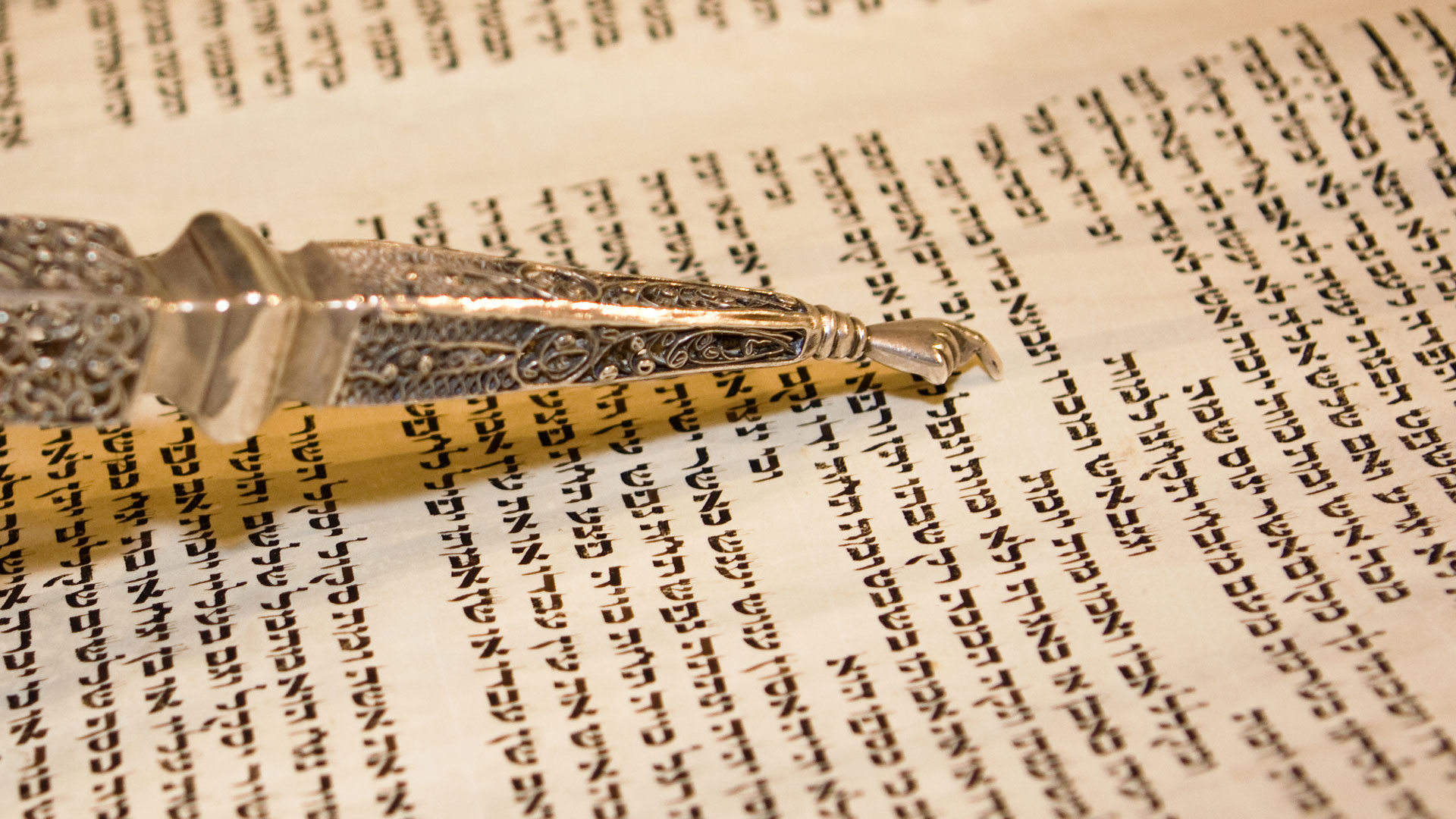
In the Jewish world of Jesus and His disciples, on the other hand, identification with a group was normally established by behavior based on unity of belief.
What, then, defined the early followers of Jesus? They believed that Jesus was the Messiah, had been resurrected from the dead, and had called people to walk as He walked. When they did, they became followers of “the Way” of God. Part of the work of John the Baptizer was to “prepare the way of the Lord” (Luke 1:76; 3:4), a restatement of a prophecy written by Isaiah (Isaiah 40:3). “The Way” was a prescribed mode of living based on the laws and revelation of God that had been delivered through Moses and the prophets.
The concept of the Way was well established in the Jewish society of John’s time and remains so among many Jews to this day. When Jesus spoke about the broad way that leads to destruction and the narrow way that leads to life (Matthew 7:13–14), people knew what He meant. The term the Way is found in all the Gospel accounts, the book of Acts, and various epistles written by four different authors.
For the apostles and the first followers of Jesus, this Way became the identifying feature of the early church. They were followers of the Way, which was grounded in the existing Scriptures. In the book of Acts, Luke records details of a major gathering of the apostles and believers in Jerusalem to deal with the question of whether gentile followers had to be circumcised to become true followers of the Way. In summing up the conference, James made the statement that “Moses has had throughout many generations those who preach him in every city, being read in the synagogues every Sabbath” (Acts 15:21). James conveyed that gentiles could learn the basics of the Way in the synagogues scattered across the face of the Roman Empire. The early church had its origins in the synagogues of the Roman world and among the God-fearing gentiles who were present.
The apostle Paul taught that the Hebrew Scriptures define how to live. Writing to his helper Timothy, he said that those writings, coupled with faith in Jesus Christ, were the means by which people could have salvation (2 Timothy 3:15–16). While some scholars consider the letter a later work, written by a disciple of Paul perhaps some 30 years after the apostle’s execution, no scholar of any repute rejects the idea that the Scriptures referred to were the Hebrew and Aramaic writings generally called the Old Testament. In other words, the letter is in harmony with the rest of the New Testament in highlighting the dependence of the early followers of Jesus on those Scriptures. According to the conclusion of scholars, we have a scenario of a Pauline community at the end of the first century still using the Hebrew Scriptures as the basis of their teaching, belief and action.

The concept of a Christian community today existing without the New Testament is incomprehensible, but that was the reality for the early church. The Old Testament provided the basis of their conduct and behavior toward God and His Son, Jesus Christ, and toward each other. The church was defined by its behavior, and its behavior demonstrated its underlying beliefs—all of which were firmly established in the Old Testament.
Yet as we read the writers and apologists throughout church history, we find increasing reinterpretation and, as a result, a decreasing reliance on the Old Testament. The Hebrew Scriptures were rerendered to present the progressively more gentile church as the Israel of God. This is known as Replacement Theology or Supersessionism: promoting the gentile church and leaving the descendants of Jacob, or Israel, out of the picture.
That the Scriptures (Old and New Testaments) relate to both Israelites and gentiles—a feature of Hebraic thinking—was beyond the understanding of Hellenistic society, which tended to see the world in terms of either-or. Because they saw much of the Old Testament as relating to the history of the Israelite and Jewish peoples, it held little interest for them. Certainly the parts that spoke about the coming Messiah could be used as proof texts, but otherwise there was little reason to use the Hebrew Scriptures. They focused their study on the New Testament, with the result that appreciation of the interrelationship of the “Old” and the “New” became more and more limited. Thus orthodoxy came to be defined in terms of the New Testament. Paradoxically, though perhaps predictably, even the Jewish context of those who wrote its books was ignored.
Heresy Goes Bad
If the concept of orthodoxy was foreign to the writers of the New Testament, then what about heresy?
The Jews themselves defined their various sects as heresies (Greek hairesis). In the first century, this was not a negative term. First-century Jewish historian Josephus refers to the Sadducees, Pharisees and Essenes as the heresies of the Jews (Antiquities of the Jews, 13.171). Luke, writing in the book of Acts, shows that the followers of Christ were viewed as yet another heresy, known at that time as “the sect of the Nazarenes” (Greek Nazaoraios) (Acts 24:5). Thus, in the first century, the term heresy defined the teaching of a particular school. The word had been used this way in the Greek-speaking world since the time of Plato.
In the New Testament, the followers of Christ clearly fit within the Jewish milieu of the first century. This is not to say that everyone agreed with them. Obviously the apostles had opponents who sought to subvert their teachings. This was a challenge they had to face and is a feature of their writings in the Epistles. But within their first-century Jewish context, the followers of Jesus were seen as establishing yet another teaching or “heresy.”
But if we fast-forward to the late second century, we find the term heresy taking on a new meaning. Now it has acquired the sense of false teaching and is used to characterize those who teach contrary to the emerging “orthodox” understanding.
So, the concept of heresy as we use the term today, is—like orthodoxy—largely a second-century development.
The concept of Christian orthodoxy did not become fully established, however, until after the Council of Nicea in 325. Convened by Constantine to resolve differences within the church, it failed to accomplish that goal simply because, with very few exceptions, the clergy from the Eastern empire were the only ones who attended. The council’s decisions therefore did not represent the whole community, and they were contested for many years before a sense of intellectual conformity that could be termed orthodoxy began to prevail. What is clear from Constantine’s statement to those gathered for the council is that, at least in part, the motivation for establishing orthodoxy was a desire to secure an identity independent of the Jews.
Anglican scholar Rowan Williams, presently Archbishop of Canterbury, acknowledges the validity of this overview. He writes, “Heresy is the necessary precondition for orthodoxy, yet orthodoxy may be as much a metamorphosis (or pseudomorphosis) of the foundational religious idea as heresy” (The Making of Orthodoxy, 1989).
Karen L. King describes the historical development of Christianity by reminding us of the children’s story of “Goldilocks and the Three Bears”—too much, too little, and just right. Jewish Christianity was too Jewish; Gnostic Christianity wasn’t Jewish enough; orthodox Christianity was just right (The Gospel of Mary of Magdala, 2003).
The inescapable conclusion is that today we use the second-century inherited terms heresy and orthodoxy because of groups who centuries ago sought to distance themselves from the Old Testament.
Interviewed recently for the New York Times, Jacob Neusner, a prolific author on Judaism, noted that Christians must eventually come to terms with that faith. He said, “If Christians take the Hebrew Scriptures to their height, they will find that Judaism embodies those imperatives, the commandments of the Old Testament, in a way Christianity does not.”
Neusner makes a valid point. What we have today, because of the development of orthodoxy, is a worldwide church with which the apostles would not identify and in which they would not feel at home. In reality, that orthodoxy is yet another heresy.