

Eat Your Fish and Save Them Too
Marine Restoration and the “Catch Shares” Strategy
This marine biologist decided that just studying the collapse of global fisheries wasn’t enough. How could she help save them?









Like many children who love the ocean (and dolphins), Amanda Leland wanted to be a marine biologist when she grew up. For her, it ended up being an important step toward her current position as the executive director of the Environmental Defense Fund (EDF).
Back in her university days, ocean health and fishery sustainability were not looking good. “I was in grad school when US fisheries were collapsing everywhere,” says Leland. “And I thought, ‘I could continue on as an academic and write paper after paper about the collapse of this or that fishery—or I could not accept that this is the fate of our planet.’ I chose option B, and that’s when I flipped to the solution side: seeing all these problems and wanting to fix them. I’m an environmentalist, and by design, it’s in our DNA to always worry about all the problems. That’s who we are.”
Cowritten with journalist James Workman, Sea Change: Unlikely Allies and a Success Story of Oceanic Proportions tells the story of returning US fisheries to sustainability. Critics argue that the catch-shares strategy has created a disproportionate advantage to some fishing industry groups over others. While this may be so and requires ongoing attention, the evidence for fishery recovery looks very positive. Vision contributor Dan Cloer spoke with Leland about this success story following the 13th annual World Ocean Summit and Expo in Montreal in early 2026.
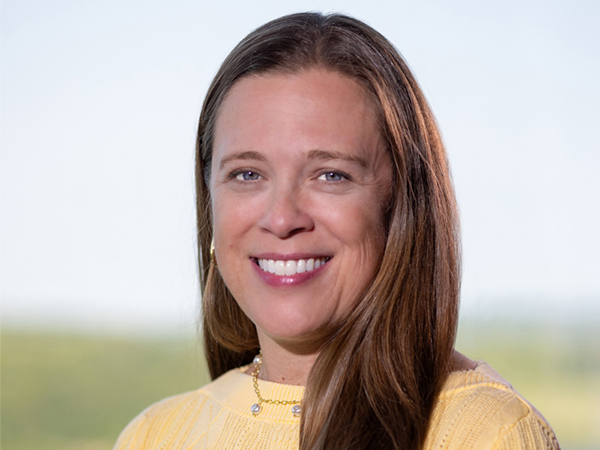
Amanda Leland, executive director of the Environmental Defense Fund, holds a master’s degree in marine biology from the University of Maine.
DC At the beginning of Sea Change, you say there’s a paradox: Better fishing can save fishing. It seems odd that we can actually increase the fish population and ocean health by fishing. Could you elaborate on that?
AL The idea that you can actually have a successful fishing industry and have a recovered, healthy ocean feels counterintuitive to most people. I think one of the biggest lessons from the story, and the experience that we’ve had supporting sustainable fisheries in the United States and around the world, is that when fishermen have a vested interest, you get outsize benefits. Just to be clear, when I say “fishermen,” I’m actually using that as not a gendered term; 50 percent of the workforce in coastal fisheries around the world is women.
DC How does the “catch shares” strategy improve fishery health?
AL The fundamental premise of catch shares is this: Rather than each fisherman competing against every other fisherman—which means a rush to catch as much as possible before the clock runs out—each one is now allowed a certain percentage, or share, of the catch for the entire year. That percentage for each fisherman is tied to what is scientifically sustainable for the entire fleet for the year. It’s science-based in terms of evaluating and understanding the size of the fish population.
DC Do the fishermen have a problem with this scientific oversight and the limitations it imposes?
AL They certainly did 25 years ago in a collapsing stock situation, where incentives were very short-term. The only goal was to catch as much as they could right now, with almost zero regard for next year. That’s the system they were operating in: Catch as much as possible before it’s gone. After catch shares started to be implemented, the whole thing flipped around, and fishermen became advocates for better science.
“Think about it this way: The total amount that can be caught in a year is a pie, and each fisherman’s share is a wedge of that pie. The pie may begin small, but as the population of fish recovers and increases, the pie gets bigger, and the fisherman’s slice increases too.”
As the fish increase, the catch increases and subsequently so do the profits, one’s livelihood. At the end of the day, a catch-shares program is actually a market-based mechanism, because fishermen have these percentage shares, and they can also buy and sell shares. There are some caps to ownership, and there can be disagreements concerning too much or too little consolidation in a fishery. That’s reasonable; people can disagree.
Overall, however, catch shares encourages a feedback loop, where the fishermen become the vested conservation advocates in their fishery and for the oceans in general. Their ability to continuously catch year over year becomes most important—a shift from the short-term to the long-term view. It’s tied to ensuring the whole fleet stays within a healthy fishing level. Now the science of fish stocks becomes integrated into their personal incentive in a way that wasn’t happening before.
DC Then that’s the answer to the paradox. The catch-shares strategy addresses the tragedy of the commons, where the incentive is simply extracting as much of the resource as possible before it’s gone—the “If I don’t get it first, someone else will” problem.
AL Yes, catch shares is a structural fix for the commons problem. Fundamentally an asset has been created, because fishermen can buy and sell these quotas, or catch shares. That asset provides a lasting value proposition: Fishermen now have a growth mindset.
Now, I don’t want to suggest that all the problems have been solved along the way. There are still issues. For instance, if you have a catch-shares program in one region, and you don’t have proper management in another region, and fish are moving between the two places, you get “leakage”: Fish are disappearing from the system. That’s a big concern for different sectors in the fishing world, such as commercial fishing and recreational fishing. If all the people catching fish aren’t following some similar set of guidelines, you can also have fish disappearing from the system.
“Catch shares doesn’t fix everything, but it certainly creates the framework by which resilience and sustainability are much more likely over time.”
Experience shows that it works, because the people who are closest to the problem are also closest to the solution; so you actually get a much more powerful outcome. It’s in their direct interest to have a healthy, abundant ocean.
DC Some critics of Sea Change argue that the book does not speak to the problem of the corporate consolidation of fishing quotas and that the small fisherman and indigenous tribes are losing out.
AL As with any public policy, it’s true that the design of some rights-based management approaches can have unintended consequences. Regional fishery managers, though, have a lot of tools to be able to improve these programs to ensure more fair and equitable access to our nation’s fisheries. Managers have a range of options to choose from for the initial allocation of quota.
DC Tell me more about the situation prior to catch shares in the United States.
AL In the early 2000s there were continuous headlines saying the oceans were emptying of seafood. It was at a fever pitch! There was pretty consistent collapse happening on the West Coast, in the Gulf and in the Northeast.
Adoption of the catch-shares management system came in part by a reform of the Magnuson–Stevens Fishery Conservation and Management Act (MSA) in 2007, requiring rebuilding the fisheries and the end of overfishing by a certain date. This was a real catalyst for driving management reforms. Catch-shares programs in the contiguous 48 states were being conceptualized around that time, and it really juiced the system. Alaska converted first in the 1990s, separately from the rest of the United States, under the American Fisheries Act. Catch shares was utilized in the Alaska pollock fishery, which is the world’s largest food-fish fishery. Then there was a separate piece of legislation that drove catch-shares adoption in the Alaska crab fishery. But in the Lower 48 the catalyst and a lot of the conversion happened from 2007 onward.
DC I’ve read about the Alaskan pollock recovery and was surprised that McDonald’s Filet-O-Fish sandwich was a key factor in the fishery restoration sustainability story.
AL It’s so interesting, and it’s such a surprise for so many people. One of the things the catch-shares management strategy does is make the industry much more consistent. McDonald’s needed to be able to make this fish sandwich the same—100 percent consistent—for every person that buys one. As far as I know, McDonald’s was not a driver of management reforms but a beneficiary.
DC Before the MSA, what was happening?
AL As fish stocks were declining in the ’90s, regulators responded by trying to control fishermen’s behavior: mandating only boats of x-size; engine that’s only so big; no fishing on Sundays; enforcing a fishing “season”; and my favorite, trip limits—you can only catch so many fish per fishing trip—which was pretty common.
So what to do if you can only catch so many fish per trip for a limited time? You’re going to take more trips, right? You’re going to fish in dangerous conditions. These restrictions didn’t actually control the catch. Although well-intended, the regulations accelerated the decline. Still, even in that time of decline, the fishermen’s incentive was to race against every other fisherman to catch as many fish as they could as fast as they could.
DC You write of this scramble as “the Derby,” which exacerbated overfishing, bycatch loss, trawling and sea-bottom destruction.
AL Right. It’s a derby, and often it’s like a demolition derby, because there’s zero regard for the quality of the product or how it’s caught. And fishermen least of all are happy with that. I remember meeting with a fisherman from California. I worked for a member of Congress at the time, and the fisherman was telling us about this dire situation. He was sitting in the congressional office crying, because he felt so awful having to throw back all these dead fish. Bycatch was everywhere, and it made no sense to the fisherman, but it was the way the system was designed and foisted on them.
So, in the mad rush to just catch the limit, they weren’t paying attention to whether they were snagging seabirds or undersize fish (which weren’t counted against the limit). So young fish—next year’s seed stock, so to speak—were just discarded as bycatch with no value, and therefore lost to the whole system.
DC Tell me about fishery restoration. Have catch shares actually increased the “pie” of sustainable productivity?
AL Yes, that’s right, pretty much across the board. It’s been implemented in the vast majority of federal offshore fisheries in the United States. There are also smaller coastal fisheries managed by states using different strategies. And some are unmanaged, because it takes a lot of energy to manage a fishery—for a government to take on that responsibility fully. But it certainly has driven widespread recovery of failing fish stocks around the country and has turned that collapse into a story of abundance, frankly.
Sea Change is focused on the red snapper fishery, which is iconic on the Gulf Coast of the United States, but another example is the groundfish fishery off the coast of California, Oregon and Washington. [Groundfish are bottom dwellers such as sole, halibut, pollock and rockfish, among others.] That one was formally declared a federal disaster. It has over 100 species, and many are very long-lived, like 100-plus years. Some people argued that these should have been listed as threatened on the endangered-species list when the populations were collapsing. Rebuilding plans stretched out to 80 years, meaning scientists thought it would take that long for populations to recover once better management was put in place.
But today that fishery is completely turned around. All the populations except one have been fully rebuilt, decades ahead of schedule, and certified by the independent Marine Stewardship Council as sustainable, alongside all the metrics that federal fishery managers also track.
“It’s a remarkable turnaround, and it was made possible by this catch-shares system that gives fishermen the incentive to ensure the recovery of those fish populations.”
DC This also shows that the ocean is very resilient: If you allow it to heal, leave it alone for a while or stop abusing it, it will restore itself. The potential productivity of the ocean almost seems limitless with the right kind of management. Is ocean productivity an outlier when it comes to thinking about resource limitations?
AL Yes, the ocean is very resilient, and the fishery story is one of my favorites because there’s really an almost instantaneous response. If you reduce fishing, the population will come back, and that happens almost overnight.
But I would never say anything is limitless, because nature is, well, nature, and not always predictable. I do think your broader point is exactly right, which is if you manage it well, it can do more for us, and that includes having economically rational approaches. At EDF we honor and value a regulatory system to support good decisions, not a free-for-all; I’m not saying we take everything off the table, where everything is a free-market system.
The solutions that are going to last are going to make progress either a) at the lowest cost, or b) by directly investing people in that better outcome. Science can do a ton for us in terms of characterizing the nature of the problem. Then the actual practice of economics helps us figure out what interventions are going to make a lasting difference. It really is intervention design: What solution set is going to lead to x or y outcome? We need to ensure that x or y outcome includes both the ecological parameters we need to improve, and the human and social parameters we need to improve.
I think where we have a lot of room and opportunity is in the design of solutions that will enable people to have better livelihoods, tie them in to those better outcomes directly, and not cost society huge amounts of money to make meaningful progress from an ecosystem standpoint. It’s got to work all around, and if it doesn’t work for humans, it’s not going to last. Humans are part of the ecosystem, and appropriate governance can enlist them as drivers of environmental improvements. Economics is a practice that can help design solutions in which humans are rewarded for a healthier, more abundant planet.
DC How is this working in other parts of the world?
AL EDF didn’t invent the idea of catch shares, nor did the United States. We were an early adopter of it in the Great Lakes in the 1970s, but New Zealand, Iceland and other countries were putting catch-shares programs in place for their industrial ocean fisheries before the US. It has also happened in places like Namibia’s commercial fisheries. The challenge now is adopting these approaches across global coastal fisheries, including coral-reef systems, which are very fragile. This is really important for sustainability, because the coastline is where the ocean’s greatest productivity lies. It’s really important for livelihoods, because a lot of this is either subsistence fishing or small markets. It’s very localized and so also where the people are often most vulnerable. They actually rely on these coastal fisheries as their primary source of protein.
So yes, these kinds of approaches are being adopted all over the world. EDF has been involved for over 15 years in helping Belize put catch shares in place for their small coastal coral-reef fisheries. In the first year, illegal fishing dropped 60 percent, and more than 90 percent of fishermen were voluntarily reporting their catch data to managers. For sustainability this is especially important, because many of these coastal fisheries are near marine-protected areas; no fishing should happen here because it’s like a nursery ground, a source of the fishery population. Before catch shares, people were fishing in the marine-protected areas all the time. After catch shares, they saw the value of protecting that area; they were much more likely to inform enforcement agents when they found somebody fishing in the no-take zone. Again, it’s in their self-interest to see the whole ocean ecosystem recover.
DC What can the consumer do to support sustainable fishing?
AL If they live in the United States, they can buy American seafood, because the United States has the best-managed fisheries in the world. More often than not, if you’re buying wild American seafood, it’s going to be more sustainable. So if you go to McDonald’s, eat a Filet-O-Fish sandwich, and do it with pride.
Also, understand that the United States is a net seafood importer. This can be tricky to the consumer, because a large amount of seafood is caught in the United States, exported to China or another country for processing, and then reimported. Regardless, to sell in the United States there is the requirement of country-of-origin labeling, so it should say when seafood is from the United States even if it’s processed elsewhere.
Finally, no matter where you live—if you’re on the coast, go to the local fishmonger. Typically, they’re going to sell fish purchased from local fishermen who have a long-term stake in a healthy fishery and are more likely to get involved in issues around wetlands, pollution and coastal development.
DC How does catch-shares success help us move forward in other areas of environmental repair?
AL You can adopt some of the lessons from this model in different ways to make progress. For one thing, there’s a real lesson in making the stakeholders part of the solution—not foisting it on them, but having the progress be reflective of their own self-interest.
Think about groundwater, for example. It’s sort of like fish in the ocean: You can’t see it exactly, and it’s hard to really understand how bad the problem is, but it’s pretty dire. Good solutions would address the groundwater shortage and ensure that there’s enough to support both agriculture and communities. Part of that is to develop economically informed approaches so that people are rewarded when they conserve more, right? That’s a good thing that we should all want.
“Rather than parking a success story like catch shares and saying, ‘Well, if it happened, great,’ I think we should use that as the catalyst that helps people believe impossible things can happen.”
DC Are you optimistic?
AL I think there are a lot of reasons to be hopeful. It’s true the oceans are struggling, and they’re taking a lot of the strain of climate change and pollution. There’s no doubt about that. But another truth is that momentum builds momentum.
When we started on this journey, everybody thought we were crazy. In 2007 EDF set a 10-year goal to end overfishing in the United States. All we heard was, “It can’t happen; it’s all going to hell in a handbasket; it’s not possible.” I think it’s really important to hold on to what is working, and leverage that to work even better for us. I have the benefit of having been part of something really successful in solving an environmental problem, which is very rarely a thing somebody gets to do in their career. And I would love for that to be possible for other people.
DC It’s sort of a rite of passage in childhood to want to be a marine biologist. Thirty years ago the field seemed to have a sketchy future. So you would advise a little kid to become a marine biologist today?
AL One hundred percent! If someone wants to get into marine biology, I would cheer them on! Be one of those people who sees the problems and looks for the solutions, because we still need that more than ever.